 By nguyentiendung24101994
 What if your body has been trying to tell you something critical, and you’ve been brushing it off? Millions of people across the country are unknowingly living with diabetes or prediabetes, often mistaking vital warning signs for everyday fatigue, the natural process of aging, or simply too much stress. These seemingly minor shifts can gradually rob you of your energy, impact your emotional well-being, and, if neglected, pave the way for far more severe health challenges down the road. The incredibly empowering news is that by learning to spot these crucial indicators early, you can take proactive steps, consult medical professionals, and implement life-changing adjustments before serious complications ever have a chance to take hold. Don’t go anywhere, because we’re about to reveal 15 scientifically-backed early warning signs that everyone needs to know, with one specific indicator—#8—that could literally be a matter of life or death if you choose to overlook it.
Understanding the Tests That Catch Diabetes Early
Before diving into the signs, it’s vital to grasp how medical professionals identify this condition early. According to robust guidelines from both the CDC and the American Diabetes Association, there are three primary tests designed to detect potential issues long before symptoms become critical. First, the fasting plasma glucose test requires an 8-to-12-hour fast and reveals normal levels below 100 mg/dL, prediabetes between 100 and 125 mg/dL, and a diabetes diagnosis at 126 mg/dL or more. Then there’s the HbA1c test, which provides an average snapshot of your blood sugar levels over approximately three months; anything under 5.7% is considered normal, 5.7–6.4% indicates prediabetes, and 6.5% or higher confirms diabetes. Finally, the oral glucose tolerance test involves fasting, followed by consuming a 75-gram glucose beverage, where a two-hour reading below 140 mg/dL is normal, 140–199 mg/dL suggests prediabetes, and 200 mg/dL or above points to diabetes.
It’s crucial to understand that even when your levels are just “borderline,” perhaps a fasting glucose of 110 mg/dL, the delicate nerves and tissues throughout your body can already start experiencing subtle, damaging changes. Extensive research consistently highlights how early detection through these precise tests can dramatically improve long-term health trajectories. So, if you’ve ever had a persistent feeling of being “off” but your routine lab results were vaguely “okay-ish,” the following signs are absolutely worth investigating further.
Many individuals unknowingly dismiss the quiet whispers their body sends when blood sugar levels are elevated, attributing them to the general stresses and strains of daily life. However, cultivating an awareness of these signals could be the pivotal step towards timely medical testing and implementing crucial, supportive lifestyle modifications. Let’s meticulously explore each one, starting now.
1. Tingling, Burning, or Numbness in Hands or Feet (Early Neuropathy)
Do you ever experience a persistent pins-and-needles sensation in your toes, particularly at night, or a bothersome burning feeling when you slip under the covers? These unsettling sensations can severely disrupt your sleep and are often one of the earliest signs of nerve involvement. This occurs because elevated blood sugar, even at levels considered only mildly high, starts to impact delicate nerve fibers. While many initially attribute these feelings to “poor circulation,” scientific studies increasingly connect them directly to nascent changes in your peripheral nerves, a condition known as early neuropathy.
2. Dark, Velvety Skin Patches (Acanthosis Nigricans)
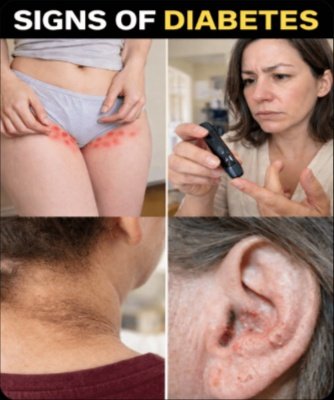
Have you noticed areas of skin that appear thick, dark, and possess a velvety texture, particularly around your neck, armpits, or groin? This distinctive skin condition, medically termed Acanthosis Nigricans, is a classic and highly visible indicator that frequently points towards underlying insulin resistance. It characteristically manifests in skin folds and is far more prevalent than many people realize. Should you observe this particular alteration in your skin, it’s a significant detail that warrants an immediate discussion with your healthcare provider.
3. Slow Digestion and Feeling Overly Full
Do you frequently feel uncomfortably bloated or overly full, even after consuming what seems like a light meal? Elevated blood sugar levels can significantly impede the rate at which your stomach empties its contents, leading to this persistent sensation of being stuffed. This feeling, occurring even after a small portion, can be a crucial early indicator that many people unfortunately brush aside. It’s a clear signal that your digestive system could be encountering difficulties and merits attention.
4. Reactive Hypoglycemia After Carb-Heavy Meals
Ever experience shaky hands, cold sweats, or a sudden, racing heart a couple of hours after indulging in sugary treats or a carb-heavy meal? This phenomenon, known as reactive hypoglycemia, happens when your body produces an excessive amount of insulin in response to a glucose spike, causing your blood sugar to plummet too low. This specific pattern is frequently a significant red flag for prediabetes, with numerous studies indicating its common occurrence in individuals long before they develop full-blown diabetes.
5. Sweet-Smelling Urine That Attracts Ants
This might sound unusual, but have you ever noticed your urine having a distinctively sweet odor, perhaps even attracting ants to your toilet bowl or trash can? When your blood sugar levels become excessively high, your kidneys begin to filter out the surplus glucose, causing it to “spill” into your urine. This gives it a sugary scent, which can indeed draw insects. While an “old-school” indicator, this sign is still incredibly relevant today and strongly suggests your blood sugar levels require immediate medical assessment.
But hold on, we’re just getting started—continue reading, because the next signs might hit even closer to home than you think.
6. Blurry or Fluctuating Vision
Do you find your vision becoming intermittently blurry or fluctuating throughout the day? Elevated glucose levels have the remarkable ability to draw fluid into the lenses of your eyes, leading to temporary difficulties with focus and clarity. This isn’t necessarily a permanent condition like diabetic retinopathy; rather, it often represents reversible early changes in many instances. If you observe your vision quality shifting noticeably at different times of the day, it’s a symptom you absolutely must track.
Quick check-in! As you’ve read through these critical indicators, how many have resonated with your own experiences? Take a moment right now to mentally (or physically!) jot down the single most prominent sign you’ve noticed—this immediate self-assessment could be the crucial first step on your path to clarity and action.
7. Slow-Healing Cuts or Bruises
Have you noticed that minor scrapes, cuts, or bruises seem to take an unusually long time to heal, lingering for weeks rather than the typical few days? This prolonged healing process can be a direct reflection of compromised circulation and a weakened immune response, both of which are common consequences of persistently elevated sugar levels in the blood. This frequent complaint is often dismissed as a normal part of aging, but it is a significant symptom that undeniably warrants a much closer look.
8. Unexplained Weight Loss (The Potentially Deadly Clue)
This is the sign you absolutely cannot afford to ignore: Are you rapidly dropping pounds without any intentional effort, even though your eating habits remain normal or have even increased? When your body lacks effective insulin, it’s unable to properly utilize glucose for energy, forcing it to catastrophically burn through its own fat and muscle reserves as an alternative fuel source. In certain scenarios, particularly with Type 1 diabetes, this accelerated breakdown can rapidly escalate into a life-threatening emergency known as diabetic ketoacidosis (DKA). Consider this real-life example: A 39-year-old man, baffled by an inexplicable 18-pound weight loss over just six weeks despite a ravenous appetite, ultimately found himself hospitalized in critical condition. Early intervention and testing could have entirely rerouted his perilous journey. This particular sign is a critical alarm bell that demands immediate medical attention, as overlooking it can swiftly lead to dire and potentially fatal consequences.
Congratulations for making it this far – you’re now among the informed few who are truly grasping the full scope of these vital health signals. Your engagement is commendable!
9. Crushing Fatigue That Won’t Quit
Do you experience an overwhelming, crushing fatigue that persists relentlessly, even after getting what seems like adequate rest? These debilitating energy crashes occur because your body’s cells are struggling to properly absorb glucose, their primary fuel source, due to insulin issues. Countless individuals report a dramatic lifting of brain fog and a significant return of vitality once their blood sugar levels are stabilized through appropriate medical guidance. If your usual coffee fix no longer provides any relief, this profound exhaustion could be a critical clue you need to investigate.
10. Frequent Gum Infections or Periodontitis
Surprisingly, your oral health can provide early warnings. Persistent or recurring gum inflammation, often diagnosed as periodontitis, can be one of the very first indicators that dentists notice during routine check-ups. Extensive research has firmly established a link between chronic gum disease and an elevated risk of heart complications in individuals who are grappling with underlying blood sugar imbalances.
11. Constant, Ravenous Hunger (Polyphagia)
Are you plagued by a constant, insatiable, and truly ravenous hunger, even shortly after you’ve just finished a meal? This phenomenon, known as polyphagia, occurs because your brain mistakenly perceives that your body has low usable energy, despite having consumed food. It then sends powerful signals to eat more. This relentless drive to consume food often surprises many individuals who simply believe they’re experiencing a day of unusually large appetite, unaware of the deeper metabolic struggle.
12. Unquenchable Thirst (Polydipsia)
Do you feel an unquenchable, persistent thirst that no amount of water seems to satisfy? This intense thirst, medically termed polydipsia, arises because your kidneys are working in overdrive, desperately attempting to flush out the excess sugar from your bloodstream. In this process, they pull significant amounts of water along with the glucose, leading to severe dehydration. While drinking more water offers temporary relief, it critically fails to address the underlying root cause of the problem.
13. Fruity or Acetone-Like Breath Odor
Have you (or someone close to you) noticed a distinctively fruity or even nail-polish-like scent on your breath? This peculiar odor is a serious warning sign. It’s caused by the breakdown of fats for energy, which produces byproducts called ketones. These ketones are then exhaled, creating the characteristic smell. A simple, quick sniff of your own breath, perhaps after brushing, could unveil this critical signal, particularly in cases where blood sugar is severely uncontrolled.
Here’s an invaluable bonus tip that many resources overlook: make a conscious habit of tracking any unusual or persistent breath odors you detect. This seemingly minor observation can serve as a powerful and early prompt to seek immediate medical testing.
14. Hormonal Shifts (Low Testosterone or Irregular Cycles)
Did you know that elevated blood sugar levels can have a profound impact on your body’s delicate hormonal balance? In men, this disruption can manifest as symptoms of low testosterone, while in women, it may lead to irregular menstrual cycles. These significant hormonal shifts are often insidious, frequently going completely unnoticed or being misattributed until a cluster of other symptoms becomes undeniable.
15. Recurring Infections (Skin, Yeast, or UTIs)
Are you experiencing a troubling pattern of recurring infections, whether they be persistent skin infections, frequent yeast infections, or bothersome urinary tract infections (UTIs)? Consistently high glucose levels can significantly compromise and weaken your body’s immune response, making you far more susceptible to a wide array of fungal, bacterial, and urinary pathogens. If you find yourself battling repeat infectious issues, it’s a crucial indication that it’s time to connect these seemingly disparate dots and investigate further.
Common Early Signs vs. Why They Happen
| Sign # | Symptom | Likely Mechanism | Urgency Level |
|---|---|---|---|
| 1 | Tingling/Burning Extremities | Early nerve damage | Medium-High |
| 2 | Acanthosis Nigricans | Insulin resistance | Medium |
| 5 | Ant-Attracting Sweet Urine | Glucose spillover >180 mg/dL | High |
| 8 | Unexplained Weight Loss | Ineffective insulin use | VERY HIGH |
| 13 | Fruity Breath | Ketone production | High |
| 15 | Recurrent Infections | Impaired immunity | Medium-High |
This concise and impactful summary is designed to help you quickly prioritize which symptoms warrant the most urgent attention and discussion with your trusted healthcare provider.
Ignoring vs. Acting Early: A Quick Comparison
Consider the stark contrast between two paths: choosing to ignore these critical warning signs might allow you to seemingly “function” through your daily life, but beneath the surface, a serious health issue continues to silently fester and progress. Conversely, taking proactive action by getting tested early often paves the way for straightforward, impactful adjustments to your diet and physical activity, which can dramatically support healthier blood sugar management. What’s the profound long-term difference? It’s a choice between facing significantly reduced risks of debilitating nerve damage, vision impairment, or severe heart complications versus embracing enhanced peace of mind, vitality, and a dramatically improved quality of life.
Actionable Tips You Can Start Today
- Start a digital health journal: Make a habit of tracking any new or recurring symptoms weekly in your phone’s notes app—you’ll be astonished at how quickly patterns and insights begin to emerge.
- Daily self-assessment: Each morning, take a moment to rate your overall daily energy levels and any “unusual” physical changes on a simple 1–10 scale.
- Prioritize a check-up: If two or more of the signs discussed here resonate with your experience, don’t delay—schedule a comprehensive routine blood test with your doctor.
- Be a health advocate: Share this crucial list with a friend or family member who frequently complains of persistent tiredness or other unexplained symptoms.
- Optimize your plate: Intentionally focus on incorporating balanced meals rich in lean protein, abundant fiber, and healthy fats to naturally support more stable energy levels throughout your day.
These practical, small yet powerful steps are designed to seamlessly integrate into even the busiest schedules, empowering you to embrace a proactive approach to your health and well-being.
Imagine 30 Days From Now
Take a moment to truly envision your life just 30 days from now. Imagine proactively recognizing one persistent warning sign, promptly getting tested, and implementing simple, gentle adjustments to your lifestyle. Picture your energy levels rebounding, your skin feeling noticeably clearer, that relentless thirst finally easing, and the heavy weight of worry gradually fading away. The profound cost of procrastinating and waiting is the potential, often irreversible, progression to far more complex and challenging-to-manage health issues. Conversely, the immeasurable reward is the powerful act of safeguarding your future self and ensuring you’re there, vibrant and healthy, for all those who depend on you. Don’t delay—take that vital first step today by booking your essential check-up.
FAQ
What are the most common early signs of diabetes?
The leading early indicators often include persistent and frequent thirst, unexplainable and overwhelming fatigue, tingling sensations in your hands or feet, and cuts or bruises that are slow to heal. However, it’s crucial to understand that any combination of these symptoms warrants an immediate conversation with your doctor.
Can prediabetes cause symptoms?
Absolutely. Many individuals in the prediabetes stage do indeed experience subtle yet significant clues, such as noticeable skin changes or unexplained dips in energy. This is precisely why early testing and awareness are so incredibly vital.
How do I know if I should get tested for diabetes?
If you’ve identified several signs from this comprehensive list, or if you possess known risk factors like a family history of diabetes or excess weight, it is imperative that you initiate a discussion with your healthcare provider about the most appropriate screening tests for your individual situation.
Please be advised: This article is provided strictly for informational purposes and should never be considered a substitute for professional medical advice. Diabetes and issues related to blood sugar regulation are serious health concerns. It is critical to consult your healthcare provider immediately if you recognize multiple warning signs, experience rapid and unexplained weight loss, notice fruity breath, suffer from severe and persistent fatigue, or encounter any other concerning symptoms.
P.S. Here’s a powerful insider tip to empower you: Start tracking any new or unusual symptoms weekly in your phone’s notes app—you’ll be amazed at how quickly meaningful patterns will emerge. And don’t keep this vital information to yourself; share this article with a friend or family member who constantly complains of being “always tired.” You’ve now been armed with the knowledge of these 15 critical signs—it’s time to truly listen to your body and take that indispensable first step toward clarity and lasting health.