 By nguyentiendung24101994
 Have you ever felt that sudden jolt of panic when you notice something different about your breasts? That unsettling moment—a new tenderness, a tiny lump, or a subtle change in skin texture—can immediately trigger a cascade of ‘what ifs’ and fear, making it tempting to simply wait and hope it disappears. But what if your body is actually sending you vital messages, subtle whispers that, when understood, can transform anxiety into empowering action? The truth is, your body often communicates changes long before they become serious, and learning to interpret these signals with clarity and self-compassion is crucial. By the time you finish this guide, you’ll have a clear, reassuring framework for understanding what demands attention, empowering you to take simple, informed steps that replace panic with genuine peace of mind.
What Counts as Normal Breast Changes
Your breasts are incredibly responsive organs, constantly adapting to the subtle shifts within your body. They react to hormonal fluctuations, various life stages, and even everyday influences in ways that are almost always completely benign. For instance, in the days leading up to or during your menstrual period, the natural rise in estrogen and progesterone often leads to temporary swelling, tenderness, and a noticeably lumpy or rope-like texture as fluid accumulates in the glandular tissue. These cyclical changes typically occur in both breasts and usually subside once your period begins.
Similarly, using birth control pills, experiencing pregnancy, or navigating the transitional years leading up to menopause can all trigger comparable patterns of fullness or heightened sensitivity. Conditions like fibrocystic changes, characterized by benign fibrous and cystic tissue, are also remarkably common and frequently become more apparent just before your menstrual cycle. Reputable health organizations such as the Mayo Clinic have conducted extensive research, consistently showing that these normal, routine fluctuations do not significantly increase cancer risk for the vast majority of women.
The crucial element in understanding these changes is recognizing patterns. When any shifts you observe consistently align with your menstrual cycle or resolve naturally on their own, they are typically just your body performing its normal, healthy functions exactly as it is designed to do.
Concerning Early Breast Changes: What Deserves a Closer Look
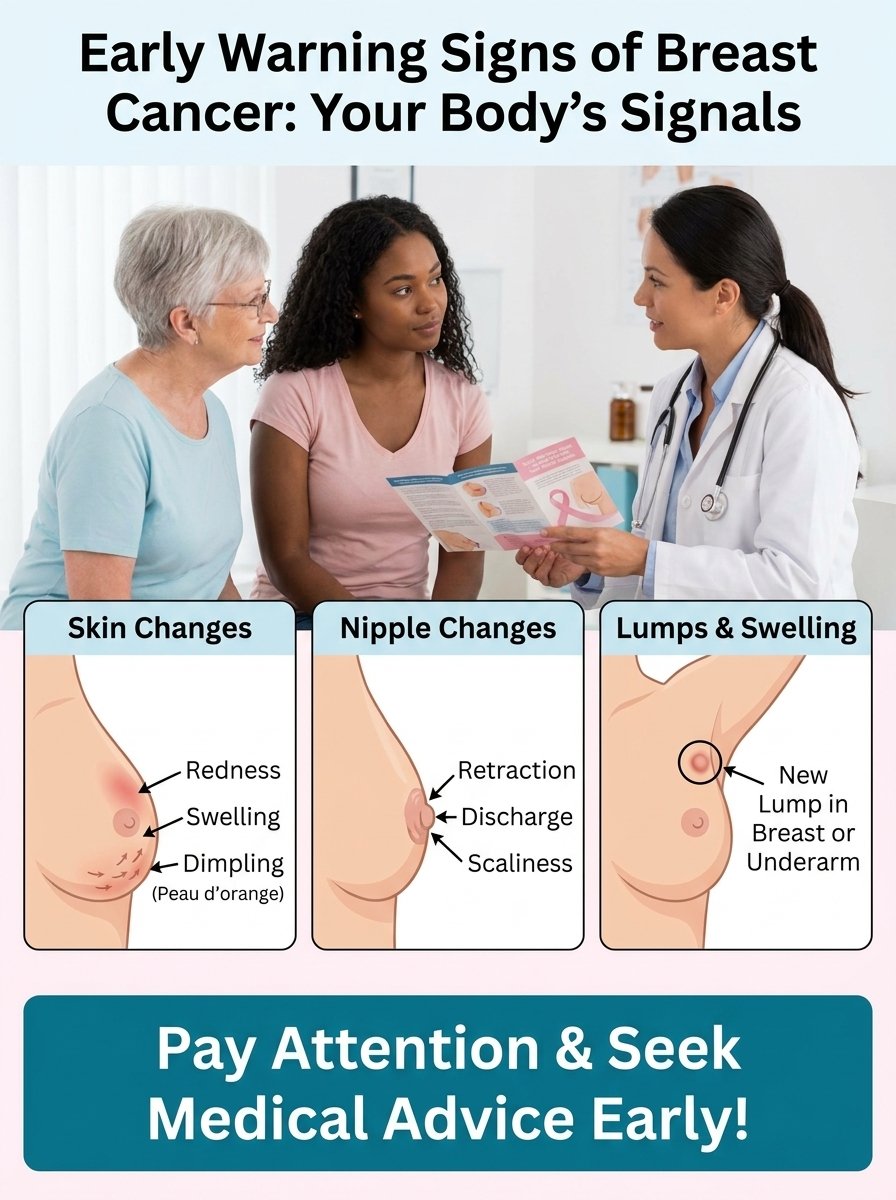
While the overwhelming majority of breast changes are harmless, there are specific new or persistent signs that truly benefit from a professional medical evaluation. It’s important to be aware of these indicators:
- A new lump or an area of distinct thickening that you notice, which does not diminish or disappear after your menstrual period has ended.
- Skin dimpling or puckering that takes on an appearance similar to an orange peel, particularly when you lift your arm.
- A nipple that suddenly begins to turn inward (inversion), flattens, or displays any crusting, scaling, or a persistent rash.
- Any spontaneous nipple discharge (which could be clear, bloody, or yellowish) that occurs from only one breast without any squeezing or pressure.
- Persistent redness, warmth, or swelling localized to one specific area of the breast that doesn’t go away.
- A noticeable and new change in the overall size, shape, or natural symmetry of your breast.
- Pain concentrated in one specific spot that remains constant and does not fluctuate in intensity or presence with your menstrual cycle.
It’s vital to remember that noticing these signs does not automatically mean cancer. Often, conditions like benign cysts, infections, or other non-cancerous growths can present with very similar appearances. The most important step is allowing your doctor the opportunity to quickly assess the situation. Early evaluation almost always provides clarity and, if necessary, opens up a wider range of effective treatment options.
Normal Changes vs. Changes Worth Checking
| Feature | Often Normal (Tied to Cycle or Hormones) | Worth Professional Evaluation |
|---|---|---|
| Lump or thickening | Appears before period, disappears afterward | New, stays the same or grows, does not resolve |
| Pain | Both breasts, dull ache before period | One specific spot, constant, unrelated to cycle |
| Skin texture | Occasional mild swelling | Dimpling, puckering, or orange-peel appearance |
| Nipple discharge | Only when squeezed, milky, both sides | Spontaneous, clear/bloody, one breast only |
| Size or shape | Temporary fullness during cycle or pregnancy | New asymmetry or contour change |
This clear, side-by-side comparison is designed to help you maintain a sense of calm while still empowering you to stay proactive about your breast health.
Why These Changes Happen
Breast tissue possesses an inherent sensitivity to a variety of hormones, including estrogen, progesterone, and others, which naturally fluctuate throughout a woman’s life. During the menstrual cycle, for instance, increased fluid retention and heightened glandular activity are common culprits behind temporary lumpiness. Pregnancy, a period of profound hormonal shifts, significantly ramps up the milk-producing structures within the breast. As women approach menopause, the often erratic fluctuations in hormones can lead to breasts feeling tender or even denser than usual.
Furthermore, various medications, such as hormonal birth control or hormone replacement therapy, can also induce similar effects. Most of the time, these shifts are simply your body’s natural and healthy way of adapting to internal changes. Only in rare instances do they signal uncontrolled cellular growth. By understanding this underlying biology, you can demystify many breast changes, viewing them as valuable information rather than immediate threats to your health.
The Emotional Side: It Is Okay to Feel Scared
Discovering a change in your breast can instantly trigger a torrent of worst-case scenarios and overwhelming anxiety. This intense emotional reaction is completely normal and is a feeling shared by countless women worldwide. The period of waiting for an appointment, or for test results, often feels far heavier and more emotionally taxing than the actual medical consultation itself.
Many individuals who later find out their breast change was entirely benign still vividly recall the intense and exhausting anxiety they experienced during that uncertain time. The compassionate truth is that fear, while natural, doesn’t offer protection; knowledge and decisive action do. Allowing yourself to acknowledge and feel your worries, while simultaneously taking the crucial step of contacting your doctor, is one of the most profoundly kind and empowering actions you can undertake for your own well-being.
Building Breast Awareness Into Your Life
Many leading health experts are now advocating for a practice called “breast self-awareness” as a more flexible and empowering approach than rigid monthly self-exams. The core principle is beautifully simple: it’s about intimately knowing what is normal and unique for your own body. Here’s a gentle, practical routine you can easily integrate into your life, starting today:
- Once a month, choose a consistent time, ideally a few days after your period has ended (or on a set calendar day if you are postmenopausal). Stand in front of a mirror with your arms relaxed at your sides, carefully observing for any changes in symmetry, skin texture, or nipple position. Then, raise your arms high above your head and repeat the visual check.
- Whether you’re in the shower or lying comfortably, use the soft pads of your three middle fingers to systematically feel the entire breast area. Move in overlapping circular patterns, varying the pressure from light to firm to ensure you cover all tissue depths. Remember to extend your check to include your armpit and the area just above your collarbone.
- Make a simple note of anything new you discover—its date, exact location, and how it feels—in a notebook or a private phone memo. Over time, these notes will help you recognize patterns more clearly.
- Should you find any persistent or newly developed findings during your self-awareness practice, make sure to discuss them with your doctor at your next clinical visit.
This thoughtful practice requires just a few minutes of your time each month and helps you stay deeply connected to your body without generating unnecessary anxiety.
Screening Guidelines: When to Involve Professionals
Professional breast cancer screening recommendations are not one-size-fits-all; they are carefully tailored based on individual factors like your age and personal risk profile. Following the American Cancer Society’s guidelines for women considered to be at average risk:
- Ages 40–44: You have the empowering choice to begin annual mammograms, should you and your doctor decide it’s right for you.
- Ages 45–54: Annual mammograms are strongly recommended as a regular part of your health routine.
- Age 55 and older: Mammograms are typically recommended every two years, although you may opt to continue with yearly screenings if that provides you with greater peace of mind.
For women identified as being at a higher risk—perhaps due to a strong family history, known genetic mutations, or having dense breast tissue—screening often begins earlier and may include additional imaging modalities like ultrasound or MRI. It’s important to note that dense breast tissue can sometimes obscure potential findings on a mammogram, so if you’ve been informed you have dense breasts, a discussion with your doctor about supplemental screening options is highly advisable. Clinical breast exams performed by a healthcare professional remain valuable conversation starters at any age. Always work with your doctor to customize a screening plan that perfectly aligns with your unique health history.
Common Myths, Debunked
Let’s separate fact from fiction when it comes to breast health concerns:
- Myth: Using deodorants or antiperspirants can lead to breast cancer.
Fact: Extensive scientific studies have consistently found no credible link between these products and an increased risk of breast cancer. - Myth: Every lump discovered in the breast is a sign of cancer.
Fact: The vast majority of breast lumps, especially in women under the age of 40, are benign conditions such as harmless cysts or fibroadenomas. - Myth: Breast pain automatically indicates cancer.
Fact: The overwhelming majority of breast pain is directly related to hormonal fluctuations and your menstrual cycle. While persistent pain in one specific spot still warrants a check-up, it is very rarely the sole symptom of breast cancer. - Myth: Only older women need to be concerned about breast changes.
Fact: While the risk of breast cancer does increase with age, significant changes can appear at any stage of life. Maintaining breast awareness is crucial for everyone, regardless of age.
Your Compassionate Action Plan
If you ever feel that something is genuinely