 By nguyentiendung24101994
 Are you feeling that familiar pull forward, the persistent tension in your neck and shoulders that seems to worsen with each passing year? If you’re over 60 and your head feels like it’s constantly drifting ahead of your body, you’re experiencing a common postural challenge known as forward head posture – but what if I told you reversing it could take just four minutes a day?
This subtle but impactful shift, often called ‘tech neck,’ doesn’t just change your appearance; it’s a gradual result of countless hours spent looking down at screens, combined with the natural aging process of our spines and muscles. The consequences extend far beyond how you look in the mirror. That extra strain on your neck can trigger relentless tension, throbbing headaches, restrict your breathing, and even make you feel less stable on your feet. Startling research has connected forward head posture to altered proprioception and balance issues, potentially increasing fall risk for some older adults. This constant forward pull adds a significant burden — imagine an extra 10 pounds of pressure on your neck for every single inch your head moves forward of your shoulders.
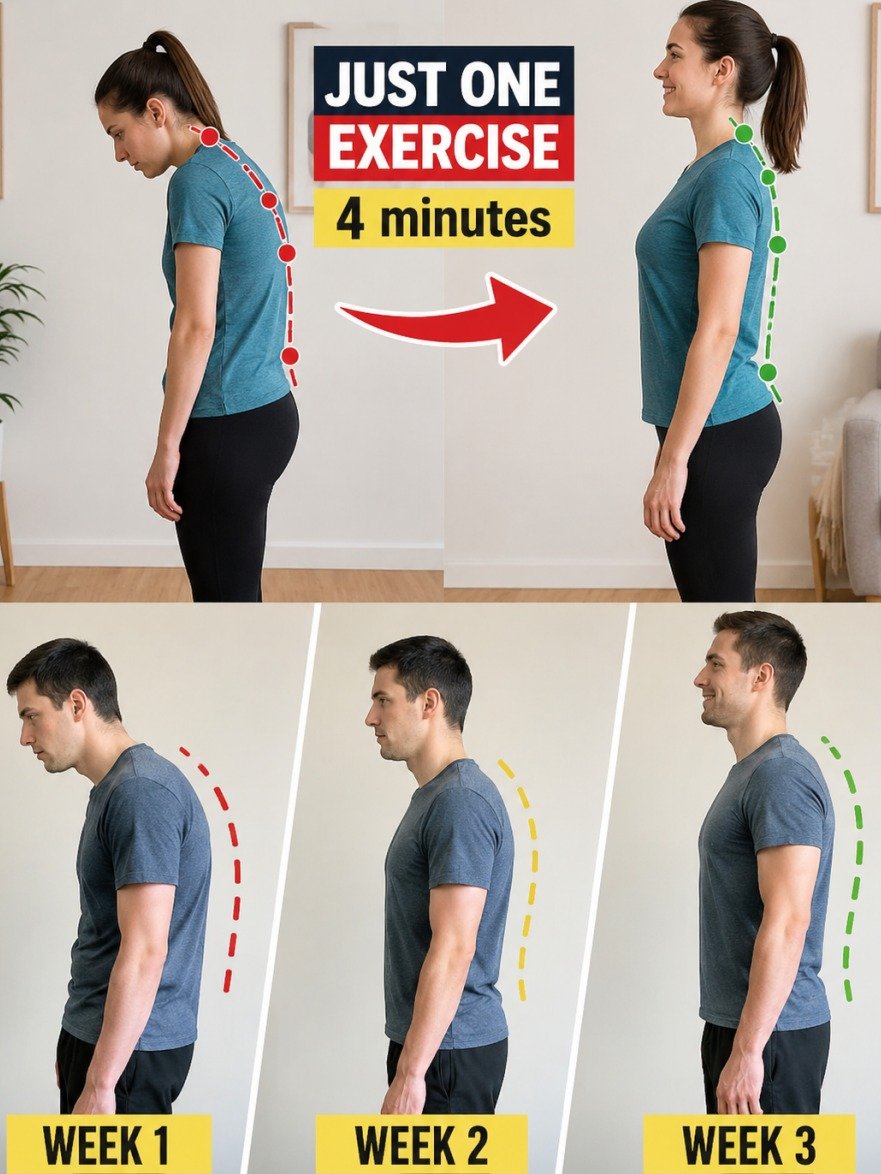
Why Forward Head Posture Becomes More Common After 60
Forward head posture is characterized by the head jutting out in front of the shoulders, rather than maintaining a balanced alignment directly above them. This misalignment places excessive demand on the muscles at the back of the neck and upper back, while simultaneously causing the muscles in the front of the neck to shorten. Over time, this imbalance can severely limit neck mobility and lead to persistent stiffness and discomfort.
A confluence of factors contributes to its increased prevalence in our later years. Decades of modern living — glued to screens, immersed in books, or hunched over a desk — effectively train the body into this forward-leaning position. These habits are compounded by age-related changes in our spinal discs, a natural reduction in muscle strength, and decreased mobility in the thoracic spine, or upper back. Many individuals first recognize this issue as a subtle