 By nguyentiendung24101994
 What if the tiny lines on your nails aren’t just cosmetic flaws, but urgent messages from your body? You might casually dismiss those subtle ridges or grooves as mere signs of aging or a bit of dryness. But these seemingly insignificant marks can often be powerful indicators, hinting at deeper stories about your nutritional intake, recent health challenges, or other vital processes unfolding within you. In this comprehensive guide, we’ll peel back the layers, exploring the various types of nail lines, deciphering their potential medical implications, and outlining simple, actionable steps you can take to foster healthier nails and boost your overall well-being. Prepare to be surprised—by the end, you’ll possess the crucial knowledge to distinguish between harmless nail quirks and those that warrant a swift conversation with your doctor, along with easy habits that can help both your nails (and you!) thrive from the inside out.
Decoding the Hidden Messages: Understanding Different Types of Lines on Your Nails
Your nails are far more than just a canvas for vibrant polish; they function as a dynamic, built-in report card for your internal health. Any shifts in their texture, color, or pattern often serve as direct reflections of changes in your nutrition, circulatory system, or even past illnesses. The reassuring news is that the vast majority of nail lines are entirely benign. However, knowing how to differentiate between them can offer immense peace of mind and empower you to recognize precisely when it’s prudent to seek expert medical advice.
Vertical Ridges: The Everyday Lines Most People Encounter
These common lines extend gracefully from the base of your nail right to its tip, typically becoming more prominent as we advance in years. Insights from reputable sources like the Cleveland Clinic reveal that these ridges frequently emerge as a natural consequence of aging, a process that naturally slows down the rate of cell turnover within the nail matrix. They can also make an appearance if your body isn’t receiving adequate amounts of specific nutrients, such as crucial proteins, iron, zinc, or B vitamins. But here’s the key takeaway: in the vast majority of cases, vertical ridges on their own do not signal a serious underlying health concern—they’re simply your nails narrating the story of a life well-lived.
Horizontal Lines (Beau’s Lines): A Temporary Halt in Nail Growth
Horizontal lines, also known as Beau’s lines, manifest as distinct grooves or indentations that stretch across the width of your nail. These intriguing marks form when nail growth experiences a temporary slowdown or even a complete pause due to a significant systemic event. This could be anything from a high fever, periods of intense stress, a major surgery, or even the effects of certain medications. Unlike vertical ridges, these lines often serve as a chronological marker, indicating something impactful that affected your entire body at a specific point in time. The comforting aspect is that as your nails continue to grow, they will eventually appear smooth again once the underlying trigger has resolved. Yet, they stand as a gentle, visible reminder of a notable event your body navigated.
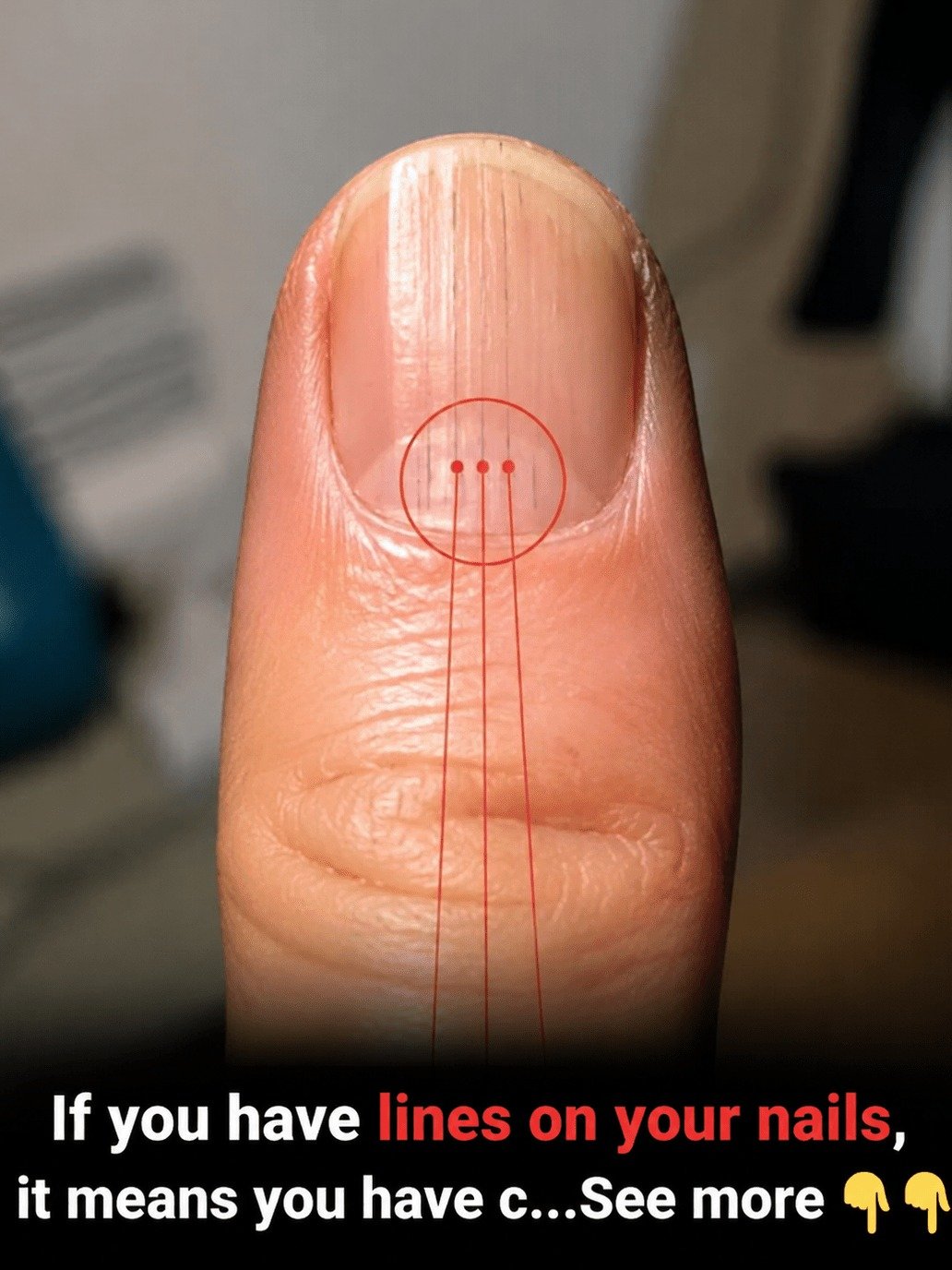
Dark Lines or Streaks: The Crucial Ones to Monitor Closely
Discovering a single dark vertical line beneath your nail can certainly be unsettling. Occasionally, this might simply be the result of a minor trauma or a common pigmentation variation, especially prevalent in individuals with darker skin tones. However, in rare instances, a new or evolving dark streak could be linked to a more serious condition such as subungual melanoma—a form of skin cancer that develops under the nail. Medical experts strongly advise that any sudden appearance of dark lines, particularly if they begin to widen or intensify in color over time, warrants immediate evaluation by a dermatologist. Prompt attention can make a profound difference, though it’s important to remember that most dark lines ultimately prove to be benign.
White Lines: From Tiny Spots to Distinct Horizontal Bands
White lines can manifest either as small, scattered spots—often the result of a minor injury or impact—or as distinct, paired horizontal bands, medically termed Muehrcke’s lines. These specific bands are frequently associated with diminished levels of albumin, a vital protein produced by the liver. Interestingly, these lines don’t affect the physical nail plate itself but rather reflect changes occurring within the nail bed underneath. They typically fade as the body’s internal balance is restored, serving as a powerful illustration of how intricately connected nail appearance is with our internal physiological state.
Here’s a concise overview of common nail line types and their potential interpretations:
- Vertical ridges – Most often linked to the natural aging process, mild dehydration, or slight deficiencies in key nutrients (such as iron, zinc, B12, or protein).
- Horizontal grooves (Beau’s lines) – Indicative of a past serious illness, a high fever, surgical procedures, chemotherapy treatments, or periods of extreme physiological stress.
- Dark vertical streaks – Can stem from trauma, normal pigmentation, or (in rare cases) melanoma—it’s imperative to consult a doctor if these are new or changing.
- White spots or lines – Typically caused by minor injuries, localized infections, or (when appearing in bands) lower-than-normal protein/albumin levels.
- Spoon-shaped or brittle nails with lines – Sometimes points to an iron deficiency or potential thyroid gland concerns.
- Clubbing or significant color changes accompanied by lines – May be related to underlying lung, heart, or liver function—always seek professional medical assessment for these signs.
The Unseen Mechanics: Why Nail Changes Occur
Your nails originate from a dynamic living tissue known as the nail matrix, an area incredibly sensitive to the intricate symphony of processes unfolding within your bloodstream. Consistent research indicates that disruptions in vital areas such as nutrition, the efficient delivery of oxygen, or the delicate balance of hormones can all leave indelible marks, visible as records etched into the nail plate. For instance, the appearance of vertical ridges often correlates with a natural reduction in collagen production over time or insufficient levels of crucial vitamins and minerals. Similarly, horizontal lines distinctly mark a specific