 By nguyentiendung24101994
 Ever sliced into a perfectly hard-boiled egg, only to be met with that unsightly green or gray ring around the yolk? You’re not alone. This common kitchen mystery has puzzled home cooks for ages, making us wonder if our eggs are spoiled or if we’ve committed some culinary sin. That frustrating discoloration can instantly diminish the appeal of your deviled eggs, egg salad, or even a simple breakfast, causing you to doubt your cooking skills. But here’s the reassuring truth: this phenomenon is completely safe, and once you grasp the simple science behind it, you’ll be able to banish that green ring from your kitchen for good.
What Is the Green Ring Around Hard-Boiled Egg Yolks?
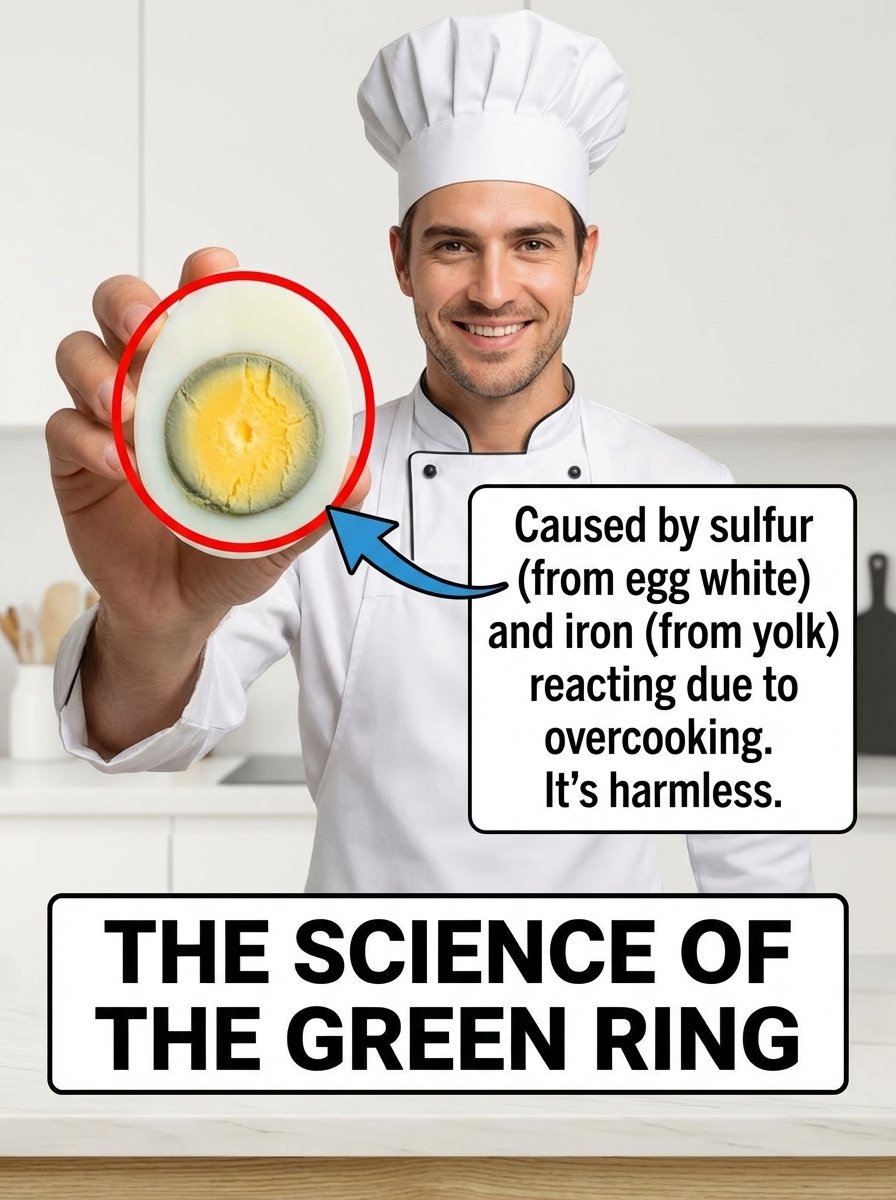
That distinctive greenish-gray halo you often find encircling the yolk of your hard-boiled eggs is, in essence, a natural chemical reaction occurring within the egg itself. This discoloration typically appears precisely where the egg white and yolk converge, and it’s a very common sight in eggs that have been subjected to heat for an excessive duration or at an overly high temperature. It’s crucial to understand that the presence of this ring does not, in any way, indicate that your egg is spoiled or unsafe to eat. Instead, it serves as a clear visual indicator that the egg has simply been overcooked.
The Science Behind the Color Change
Delving into the fascinating science, egg whites are abundant in proteins rich with sulfur, while the yolks are densely packed with iron. When these two components are exposed to heat for an extended period, an intriguing transformation unfolds. The proteins within the egg white begin to break down, liberating sulfur compounds into the mix. These freed sulfur atoms then journey towards the yolk, where they encounter the iron. The culmination of this interaction is the formation of a compound known as iron sulfide (FeS), which is precisely what produces that tell-tale green or gray ring you observe.
What makes this process even more compelling is that food science research consistently demonstrates an acceleration of this reaction when the egg’s internal temperature remains elevated for prolonged durations. The more persistently the heat is applied, the greater the opportunity for sulfur and iron to bind together. This explains why such rings are almost never encountered in soft-boiled eggs, yet they frequently appear in their hard-boiled counterparts. While the resulting color alteration is entirely cosmetic, it unequivocally reveals the story of the egg’s preparation.
Why It Happens More Often in Hard-Boiled Eggs
Achieving that perfectly firm white and solid yolk consistency in hard-boiled eggs inherently demands longer cooking times. This prolonged thermal exposure provides ample opportunity for the sulfur and iron elements to engage in their chemical reaction. Beyond just extended cooking, several common kitchen practices can significantly increase the likelihood of that green ring making an unwelcome appearance:
- Cooking the eggs for too long, past their optimal doneness
- Beginning the cooking process with hot water rather than cold
- Employing excessively high boiling temperatures during preparation
- Neglecting to plunge the cooked eggs into an immediate ice bath
- Boiling older eggs without making necessary adjustments to the cooking duration
In reality, even a mere additional minute of cooking can be enough to advance this chemical reaction sufficiently to produce a distinct ring. Interestingly, older eggs often exhibit higher pH levels, which, in certain instances, can accelerate the rate at which this color change occurs, whereas extremely fresh eggs might sometimes cook with less uniformity.
Common Mistakes That Trigger the Green Ring
Many home cooks inadvertently commit a few common errors that lead to this issue. One of the primary offenders is boiling eggs at a vigorous, rolling boil instead of a more controlled, gentle simmer. Another frequent mistake involves allowing eggs to remain in hot water after the designated cooking time has elapsed, which effectively continues the cooking process even if the heat source has been turned off. Furthermore, neglecting to immediately shock the eggs in an ice bath permits residual heat to relentlessly continue its work on those delicate sulfur-iron bonds, exacerbating the problem.
To help you better understand and avoid these pitfalls, here’s a straightforward comparison highlighting how common mistakes contribute to the green ring:
| Mistake | What Happens | Result |
|---|---|---|
| Rapid rolling boil | Excessive heat breaks proteins fast | Dark green ring |
| No ice bath | Residual heat keeps cooking | Gray halo spreads |
| Overcooking by 2+ minutes | More sulfur released | Thick, obvious ring |
| Starting in hot water | Uneven cooking from the start | Ring forms early |
By simply steering clear of these common culinary missteps, you can ensure consistently vibrant, perfectly yellow yolks with every batch of hard-boiled eggs you prepare.
How to Boil Eggs Without a Green Ring: Step-by-Step Guide
Dreaming of achieving those ideal, picture-perfect eggs adorned with brilliantly vibrant yellow yolks? Look no further. This foolproof, chef-approved method, trusted by food scientists and culinary professionals alike, is your definitive guide. It may require just a few additional minutes of your time, but it unequivocally guarantees flawless results every single time.
- Begin with intention. Carefully arrange your eggs in a single layer within a saucepan, then add cold water, ensuring they are submerged by approximately one inch. This deliberate, gentle beginning is crucial for preventing the rapid breakdown of proteins.
- Achieve a gentle simmer. Gradually heat the pan over medium heat until the water just barely begins to simmer—it should not reach a vigorous, rolling boil. As soon as you observe this gentle simmer, promptly remove the pan from the heat, cover it tightly, and allow the eggs to continue cooking in the residual hot water.
- Master the timing. For standard large eggs, adhere to these precise durations:
- Soft-boiled: 4–6 minutes
- Medium-boiled: 7–9 minutes
- Hard-boiled: 10–12 minutes (no more!)
- Cool them rapidly. The very instant your timer signals completion, swiftly transfer the eggs into a prepared bowl filled with ice water, allowing them to chill for a minimum of 5 minutes. This critical step not only halts the cooking process dead in its tracks but also significantly aids in making the peeling remarkably easy.
- Peel with ease. For the smoothest peeling experience, crack and peel the eggs while they are still submerged in the cold water. The cool water acts as a lubricant, assisting in the separation of the shell from the delicate membrane beneath.
And for those seeking an even higher level of consistency and perfection, here’s an invaluable pro tip: leverage the power of your Instant Pot or air fryer. These appliances offer a pressure-cooking method that yields exceptionally uniform results. For a flawless hard-boiled egg, simply add one cup of water to your Instant Pot, position the eggs on the trivet, and cook on high pressure for 5–6 minutes. Follow this with a quick-release of pressure and an immediate ice bath. You’ll be astonished by the consistently bright, beautiful yolks you achieve, every single time.
Does the Green Ring Affect Taste or Safety?
Let’s put this concern to rest unequivocally: absolutely not. That green ring is purely a cosmetic anomaly. The egg’s flavor profile remains entirely unchanged, and its nutritional value is completely preserved. The trace amounts of iron sulfide formed are non-toxic, a fact consistently affirmed by food safety experts from leading health organizations, who confirm it’s perfectly safe for consumption. As long as the rest of the egg appears normal and smells fresh, you can confidently enjoy it without any hesitation.
In fact, many culinary enthusiasts discover that even slightly overcooked eggs, sporting a faint green ring, can still be transformed into deliciously rich and creamy egg salad, as the underlying flavor and texture remain superb for such preparations.
Final Thoughts: Perfect Eggs Every Time
Ultimately, the dreaded green ring that can appear around hard-boiled egg yolks is simply a harmless visual cue of overcooking, stemming from a straightforward chemical interaction between iron and sulfur. Armed with this scientific understanding, preventing it becomes remarkably simple. The keys to success are consistent gentle heat, precise timing for your eggs, and the indispensable final step of an immediate ice bath. By following these guidelines, you will consistently achieve bright, visually appealing yolks that are as delightful to the eye as they are to the palate—perfect for elegant deviled eggs at your next gathering or simply a wholesome, protein-rich snack.
FAQ: Your Top Questions About Green Rings in Eggs Answered
Is the green ring found in a hard-boiled egg considered safe for consumption?
Absolutely, it is entirely safe to eat. This discoloration is purely the result of a chemical reaction and has no adverse impact on the egg’s taste, texture, or nutritional content.
Is there a way to reverse or eliminate the green ring once it has formed on an egg?
Unfortunately, once the color change occurs, it cannot be reversed. However, you can effectively camouflage it by incorporating the egg into dishes like mashed egg salad, deviled eggs, or any recipe where the yolk is thoroughly mixed and its appearance is less critical.
What accounts for the inconsistency, where some of my eggs develop a green ring while others do not?
The primary factors influencing this variability are typically the cooking duration, the temperature at which the eggs are boiled, and the crucial step of rapidly cooling them post-cooking. Maintaining consistent cooking times and diligently applying an immediate ice bath are the most significant determinants for achieving uniform, ring-free results.
Disclaimer: This content is provided solely for informational and educational purposes, outlining general principles of food science. It should not be considered a substitute for professional culinary guidance or expert food safety advice. Always adhere to established proper food handling protocols and consult trusted, authoritative sources for any specific dietary or health-related concerns.