 By nguyentiendung24101994
 Imagine sinking your teeth into a luscious, perfectly ripe strawberry, only for a fleeting glimpse of something… unexpected. Or perhaps you’ve already seen the stomach-churning viral videos: tiny white creatures squirming out of berries after a simple water soak. That instant ‘ick’ factor is real, especially when you’re expecting a pure, healthy burst of vitamins and antioxidants. Your mind races: Are they in all my fruit? Have I already consumed them? Am I going to get sick? Take a deep breath. The answer is no, you absolutely do not need to abandon your beloved berries or trash your entire harvest. There’s a clear, scientifically proven explanation behind this phenomenon, and incredibly simple, effective steps you can implement today to savor your strawberries with complete peace of mind. But before we dive into the solutions, let’s reveal the surprising truth about why these mysterious white ‘worms’ appear – and why they’re far less terrifying than you might imagine.
What Exactly Are These Tiny White Worms in Strawberries?
Let’s clear up the biggest misconception right away: these unexpected visitors aren’t actually worms in the traditional sense. Instead, they are the larvae – or maggots – of a particularly cunning invasive fruit fly known as the spotted wing drosophila, scientifically identified as Drosophila suzukii. What sets this tiny fly apart from its common cousins, which typically target overripe or decaying fruit, is its specialized, serrated egg-laying organ. This unique adaptation allows it to effortlessly pierce the skin of perfectly healthy, still-ripening strawberries, depositing its eggs directly into the fruit’s interior.
Once these microscopic eggs hatch, tiny larvae emerge. These are small, white, entirely legless, and distinctly tapered at both ends. They begin to feast on the succulent flesh of the fruit from the inside out, growing to approximately 1/8 inch in length before they’re ready to emerge and enter their pupal stage. Authoritative research from leading university extension programs, including those at Cornell University and Ohio State University, has conclusively documented the widespread proliferation of this pest throughout berry crops across both North America and Europe, a phenomenon observed since its initial appearance from East Asia around 2008.
Here’s the truly astonishing revelation that catches many off guard: on the surface, these infested strawberries frequently appear utterly flawless. You’d never suspect a thing until you either slice them open or, more effectively, conduct a straightforward at-home test.
Why Do Tiny White Worms Keep Appearing in Strawberries?
The fundamental reason these tiny white larvae make their appearance boils down to the fact that strawberries are cultivated outdoors, inherently exposed to the vast and varied ecosystem of nature. The spotted wing drosophila, in particular, possesses an irresistible attraction to the alluring, sweet, and slightly fermenting aromas emanating from ripening fruit. A single female fly possesses the capability to deposit dozens of eggs within just one berry, and since these eggs are virtually invisible to the naked eye, you remain completely unaware of their presence until the larvae have already begun their development.
This resilient pest flourishes across a diverse range of environments, from intimate home gardens and conscientious organic farms to even large-scale commercial fields where the application of potent pesticides is intentionally restricted. Furthermore, warm, humid climatic conditions significantly accelerate the fly’s life cycle, meaning what might start as an isolated issue can rapidly escalate and become conspicuously apparent during the height of strawberry season. Research consistently indicates that berries harvested later in the season face the highest susceptibility, offering a clear explanation for why a surge of encounters occurs during the abundant summer and early fall harvests.
And here’s the truly frustrating twist: simply rinsing your strawberries under running tap water, as most of us instinctively do, is largely ineffective at dislodging these larvae. This is precisely because they reside securely deep within the fruit’s interior. This inherent resistance to conventional washing is exactly why those viral salt-water videos have provoked such widespread shock and fascination — they undeniably expose a hidden reality that has been present all along, unbeknownst to many.
Are These White Worms in Strawberries Harmful to Eat?
Now for the most crucial and incredibly reassuring piece of information that experts from every relevant field want to communicate directly to you: absolutely not, these larvae are not dangerous in the slightest. Leading entomologists and dedicated food safety specialists from esteemed institutions like Ohio State University Extension and Cornell consistently reiterate that the accidental ingestion of a small number of these larvae poses no health risks whatsoever. They are predominantly composed of protein, are effortlessly processed and broken down by your digestive system, and, critically, do not harbor any diseases that are transmissible or harmful to humans.
While the undeniable ‘gross-out’ factor is a very real and valid human reaction, it’s essential to understand that this is precisely where any genuine risk concludes. There exists absolutely no scientific evidence to suggest they cause illness, and it’s highly probable that countless individuals have been consuming them unknowingly for a considerable time. Nevertheless, if the mere thought of it makes you uncomfortable – a reaction that is entirely understandable and valid – rest assured that there are remarkably simple and effective strategies available to completely circumvent them, all without compromising the delicious flavor or vital nutritional value of your strawberries.
But wait, there’s even more encouraging news! You are empowered to take full control of this situation, armed with a selection of genuinely proven techniques that deliver tangible, reliable results.
How to Check for and Remove Tiny White Worms from Strawberries
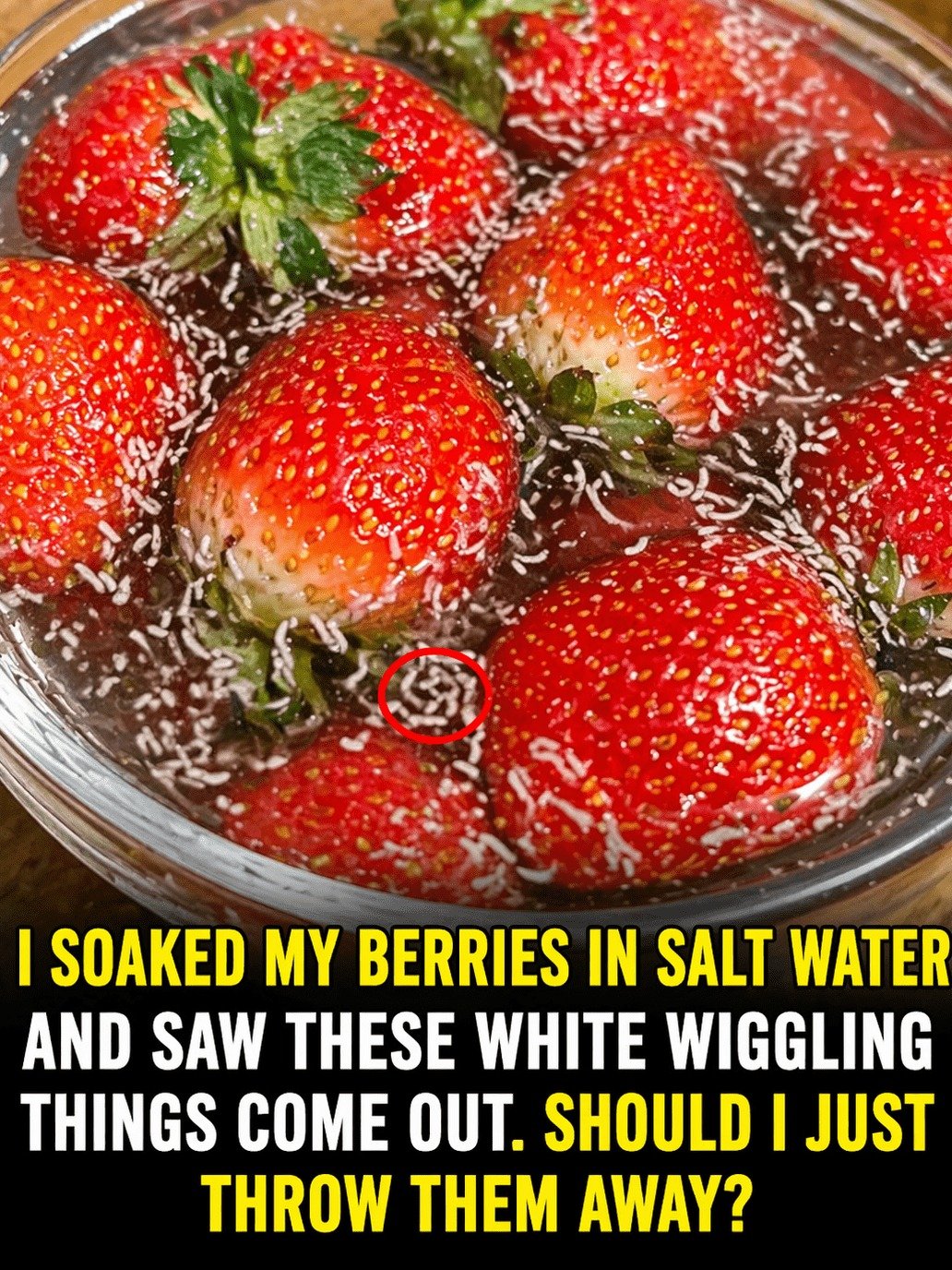
The method that has taken the internet by storm, often seen in captivating viral videos, is the salt-water soak – and we can confirm, it is remarkably effective. This technique truly gets the job done. Here’s a breakdown of precisely why it works so well and how you can apply it safely and efficiently at home:
- Begin by dissolving 1 to 2 tablespoons of ordinary table salt into 1 cup of warm water (feel free to scale up these proportions if you’re using a larger bowl or more berries).
- Carefully submerge your strawberries into this saline solution, allowing them to soak for a duration of 10 to 15 minutes.
- Observe closely as any hidden larvae begin to emerge and float to the surface – they actively dislike the salt and will instinctively attempt to escape the solution.
- Once the soak is complete, ensure you rinse the berries meticulously under cool, running water. This step is crucial for washing away all traces of salt and any lingering residue.
Leading university researchers have unequivocally validated that this straightforward test is a dependable method for coaxing larvae out of the fruit, all while preserving the strawberry’s natural, delicious taste, provided they are rinsed thoroughly afterwards.
Expert Tip: Should a salt-water soak not align with your preference, consider an equally effective vinegar rinse as an excellent alternative. Simply combine 1 part white vinegar with 3 parts water, allow your berries to soak for 5 to 10 minutes, and then rinse them thoroughly. This method not only aids in pest removal but also effectively eliminates dirt, surface bacteria, and residual pesticides, all while remaining entirely safe for consumption.
Actionable Tips to Enjoy Worm-Free Strawberries Every Time
Forget about needing specialized gear or costly devices. These incredibly practical and straightforward steps are designed to seamlessly integrate into your daily routine, significantly diminishing the likelihood of any unwelcome surprises:
- Make Smart Selections — When purchasing, prioritize berries that are firm, possess vibrant coloration, and boast crisp, fresh green tops. Steer clear of any that appear excessively soft or bruised, as these are far more appealing to pests.
- Thorough Inspection Before Storage — Before tucking your berries away, conduct a swift visual examination of each individual strawberry. Promptly refrigerate them to significantly impede any potential larval development.
- Wash Right Before Consumption — Resist the urge to snack directly from the container. Always, without exception, wash your strawberries using one of the effective methods previously outlined, just prior to eating.
- Essential for Home Gardeners — If you cultivate your own strawberries, make it a practice to harvest them daily. Immediately remove any fruit that is overripe or damaged. Additionally, consider deploying fine mesh netting over your plants during the ripening phase to deter pests.
- When Uncertainty Lingers, Cut and Confirm — For larger berries, if you have any lingering doubts, simply slice them in half. This quick check allows you to easily identify any hidden larvae before serving or consuming.
To help you choose the best approach for your needs, here’s a straightforward comparison of the two most accessible and effective cleaning methods:
| Method | Time Needed | What It Removes | Best For | After-Rinse Needed? |
|---|---|---|---|---|
| Salt Water Soak | 10–15 min | Larvae (makes them emerge) | Heavy infestation check | Yes |
| Vinegar Soak | 5–10 min | Dirt, bacteria, surface residue | Everyday cleaning | Yes |
Both of these methods are remarkably budget-friendly, utilizing common pantry staples, and crucially, they ensure your strawberries remain wonderfully fresh and flavorful.
Prevention Strategies That Actually Work Long-Term
Without a doubt, proactive prevention consistently outperforms reactive measures. Agriculturalists and home gardeners effectively mitigate spotted wing drosophila infestations through diligent sanitation practices: this includes harvesting fruit promptly as it ripens, meticulously clearing away any fallen berries, and strategically deploying traps to monitor adult fly populations. For the everyday consumer, the most potent defense lies in cultivating a consistent and thorough washing routine. While selecting berries from reputable local or certified organic purveyors can occasionally help reduce the inherent risk, it’s important to acknowledge that no single method offers an absolute 100% foolproof guarantee when dealing with the intricacies of nature.
You Can Still Love Strawberries — Here’s How to Move Forward
It’s time to reclaim your joy for strawberries! Those tiny white larvae absolutely do not need to spoil your enjoyment of this beloved fruit. Now, armed with accurate information, you understand that they are a natural, harmless occurrence in outdoor-grown produce. More crucially, you possess straightforward, effective strategies to confidently address them. The next time you bring home a vibrant pint of fresh berries, you’ll experience a sense of empowerment and readiness, replacing any lingering anxiety with pure anticipation.
So, what’s the ultimate message here? A swift, simple soak and rinse is all it takes to transform your strawberries from a source of potential ‘what ifs’ into an experience of unadulterated enjoyment. You absolutely deserve to indulge in healthy, delectable food without any unnecessary stress – and now, equipped with this knowledge, you are fully empowered to do just that.
FAQ: Your Most Common Questions Answered
1. What causes tiny white worms in strawberries?
They are larvae of the spotted wing drosophila fruit fly, which lays eggs inside ripening berries. The eggs hatch into small white maggots that feed on the fruit.
2. Are white worms in strawberries safe to eat?
Yes. Experts confirm they are completely harmless to humans and cause no health problems if accidentally consumed.
3. Does soaking strawberries in salt water really remove worms?
It does — the salt irritates the larvae, causing them to crawl out so you can rinse them away. Always rinse thoroughly afterward.
Disclaimer: This article is for informational purposes only and is not intended as medical or food-safety advice. Always follow proper food-handling guidelines from trusted health authorities. If you have specific health concerns, consult a qualified healthcare professional.
(Word count: 1,378)